

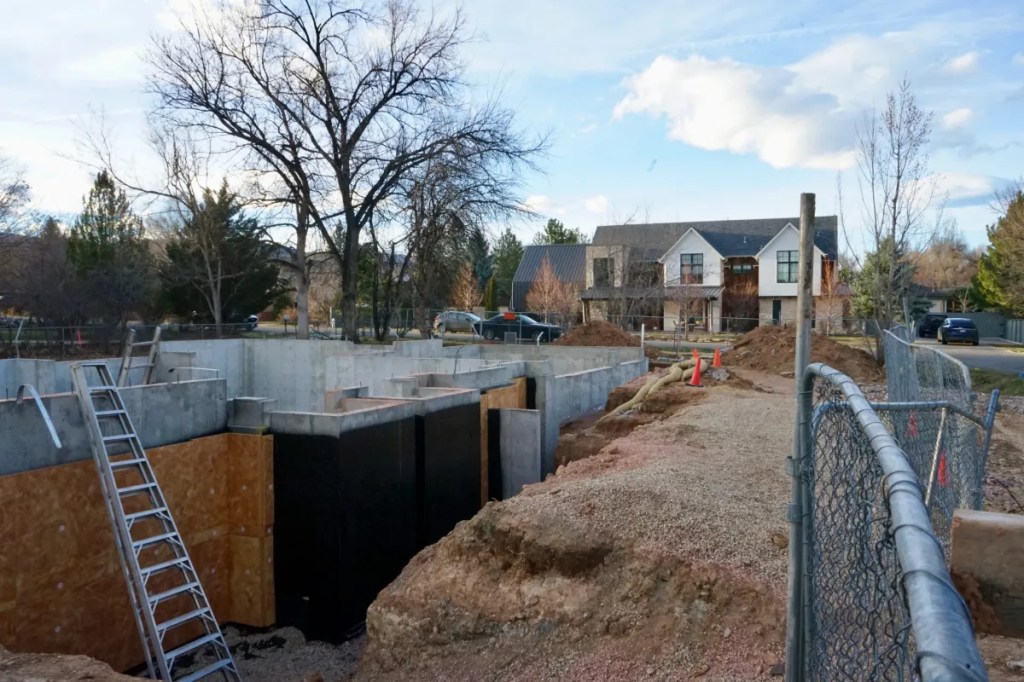
Boulder’s housing affordability crisis deepens as older homes are torn down and rebuilt, new study finds

Addressing the ‘missing middle’ — the urgent need for workforce housing in Colorado’s mountain communities
GG+A has recently worked with the Habitat for Humanity of the Roaring Fork Valley to explain and substantiate the “market” for a modular housing plant in Rifle, Colorado. Needless to say, the potential workforce housing needs far exceed what a single modular plant could produce. Expect a shift toward modular housing to continue in smaller… Read More

Chicago Approves $26.2 Million of TIF Funding for Adaptive Re-Use of 208 S. LaSalle
GG+A is proud to have contributed to the successful funding awards for the adaptive re-use of 208 S. LaSalle in the Chicago Loop. The LaSalle Residences will convert a portion of the office building into 228 units of mixed-income housing. The project has been awarded $71 million in tax-exempt housing revenue bonds (4% LIHTC) and… Read More

Several Companies Line Up to Bid on Massive State Land Holding
GG+A is proud to have assisted the State of Arizona Land Department in the evaluation of prospective bidders for the 2,300 acres of state land surrounding the Taiwan Semiconductor Manufacturing Co. campus in Phoenix. https://www.bizjournals.com/phoenix/news/2024/05/13/bidders-state-land-phoenix-tsmc.html
2023 National Airport Economic Development Conference in Rosemont, Illinois
Aaron Gruen spoke at the October 2 -3, 2023 National Airport Economic Development Conference in Rosemont, Illinois. His presentation covered the prerequisites of success for cities and regions.
Housing Needs Assessment and Strategy for Gillette, Wyoming
A recently completed study by Gruen Gruen + Associates recommends strategies for the city of Gillette to add more housing to keep up with projected employment growth.
Taking flight: A new business model helped DuPage Airport Authority and NAI Hiffman achieve success
January 8, 2023Orrin SchwarzDaily Herald https://www.dailyherald.com/business/20230108/taking-flight-a-new-business-model-helped-dupage-airport-authority-and-nai-hiffman-a-success This is a turnaround story. Credit a change in business model. For years the technology park south of DuPage Airport in West Chicago languished, unable to lure more than a few businesses. About four years ago the DuPage Airport Authority decided to try a different way at DuPage Business… Read More
Congrats to MZ Capital Partners on obtaining entitlements for its new 147-unit apartment community
GG+A was pleased to provide pre-development analysis for the project and to assist with a reduction in development impact fees for the 147-unit development in Mundelein, Illinois. https://www.dailyherald.com/business/20220823/apartment-buildings-to-replace-private-school-122-year-old-house-in-mundelein
Study provides potential solutions for local housing shortage
Stephen Dow – The Sheridan Press – Jan 13, 2022 https://www.thesheridanpress.com/news/local/study-provides-potential-solutions-for-local-housing-shortage/article_974b980e-7482-11ec-8e41-8f4b411af91f.html#comments SHERIDAN — The recently completed Sheridan County housing study unveiled during a public meeting Wednesday gave a better picture of local housing needs and potential solutions. The study, which particularly focuses on housing needs in the municipalities of Sheridan, Dayton and Ranchester, considers community… Read More
Pueblo in need of nearly 10,000 housing units by 2031, study says
Housing study suggests Pueblo County will need nearly 10,000 units in next 10 years James Bartolo – The Pueblo Chieftain – Nov 5, 2021 https://www.chieftain.com/story/news/2021/11/05/pueblo-need-nearly-10-000-housing-units-2031-study-says/6256129001/ Projections in a Pueblo Housing and Assessment and Strategy study forecast a need for 9,561 housing units in Pueblo County over the next decade. The study conducted by the City… Read More
“Fixing the housing needs in Sheridan County is going to be a public/private process, so this will hopefully give us the tools we need to get going on it”
$26.8 million redevelopment of downtown Mount Prospect shopping center gets OK from board
Gruen Gruen + Associates congratulates the development team on the approvals of the redevelopment agreement and financial incentives. GG+A acted as the developer’s real estate economist and demonstrated the need for the incentives to bridge a feasibility gap. The incentives were the most the Village has offered for a downtown redevelopment. https://www.dailyherald.com/news/20210303/268-million-redevelopment-of-downtown-mount-prospect-shopping-center-gets-ok-from-board
SMUD picks SKK/BlackPine team for 59th Street reuse project
Gruen Gruen + Associates served as SMUD’s real estate advisor for the solicitation, evaluation, and selection of the developer for the reuse of the 59th Street property formerly used as a Corporation Yard by SMUD.
Arizona State Land Department Sells East Valley Land at Record $246M Price
Gruen Gruen + Associates congratulates the Arizona State Land Department on the record setting $245 million sale of land in Phoenix’s East Valley. GG+A was pleased to contribute to the identifying bidder qualifications requirements and evaluating the qualifications of the bidders. https://www.azcentral.com/story/news/local/arizona-investigations/2020/11/05/d-r-horton-makes-top-bid-controversial-arizona-state-land-auction-east-valley/6167481002/
Arizona Republic Reviews Best-Practices for Disposition of Government-Owned Real Estate
“Best practices for governments include studying the market and the best use of the property, thoroughly evaluating how much the property would be worth under the proposed use, and making their goals clear in what they wants to get out of the sale.” – Aaron N. Gruen Glendale (AZ) City Council members said they wanted… Read More
With Oregon State Fair canceled, millions in income lost for Salem area
By Kate McMahonSpecial to Salem ReporterMay 17, 2020 Salem will be a lot quieter than usual at summer’s end as the state fairgrounds remain shuttered. The Oregon State Fair has a rich history and has touched countless lives over the years, and now vendors and exhibitors are left with no crowds to please… continue reading
Schaumburg Approves Class 7(a) Incentive for Blue Martini
GG+A was pleased to help garner support for the Class 7(a) property tax incentive that will make the redevelopment of the former RAM Brewery possible: Martini lounge planned for former Ram restaurant site in Schaumburg
Stalled by the recession, Grayslake’s Cornerstone project taking shape with Medline construction
We are delighted with the commencement of construction for the Alter Group Cornerstone development in Grayslake. Gruen Gruen + Associates has provided market analysis and fiscal and economic analysis to support the planning and public-private agreements to facilitate the development. CHICAGO TRIBUNE: Stalled by the recession, Grayslake’s Cornerstone project taking shape with Medline construction
GG+A study of retailing conditions covered in Boulder’s Daily Camera
Retailers, restaurateurs in uneasy real estate situations By Sam Lounsberry Staff Writer Daily Camera February 8, 2020 Boulder retailers and restaurateurs are facing challenging real estate costs in a local business environment likely to continue squeezing independent merchants, a city consultant warned in a December report. After collecting survey results from 42 retail and foodservice… Read More
Finney County Seeing Significant Retail, Job Growth
Gruen Gruen + Associates prepared a retail base enhancement strategy for Garden City, KS in 2014. The study has proved accurate and useful, as outlined in a Garden City Telegram article: https://www.gctelegram.com/news/20191004/finney-county-seeing-significant-retail-job-growth
Glenwood Springs Airport is under review
“It’s not just about what the residents of south Glenwood want. It’s not just about what the airport users want. As a community we need to decide what the value of that airport is.” – Mayor Jonathan Godes Post Independent – October 3, 2019
Upcoming Session at the Illinois Public Airports Association 2019 Fall Conference
On September 23, 2019, Aaron Gruen and Debra Jeans will be leading a session about “Communicating the Economic Value of your Airport” at the 2019 Fall Conference of the IPAA. The conference is being held from September 22, 2019 to September 24, 2019 at the Eagle Ridge Resort & Spa in Galena, Illinois.
Santa Clara Paves Way for Hunter Storm’s Huge Transit-Oriented Gateway Crossings Project
GG+A is thrilled with the approval of an innovative transit-oriented development in Santa Clara, CA. GG+A contributed retail market research and marketing strategy and planning policy recommendations for the developer Hunter Storm properties. Santa Clara paves way for Hunter Storm’s huge transit-oriented Gateway Crossings project Silicon Valley Business Journal Marlize van Romburgh Jul 10, 2019
Continued Momentum and Success at the DuPage Business Center
GG+A is glad for the continued momentum and success of the DuPage Business Center. We are proud to have contributed to the revamped real estate development and marketing strategy. GG+A has also recently completed an analysis of the economic and fiscal impacts generated by the DuPage Airport and its DuPage Business Center. DuPage Airport Authority… Read More
Western Regional Science Association Annual Meeting, February 2019
Claude Gruen served as a panelist on the economic, social, and land use effects of new transportation technologies at the Western Regional Science Association meeting in Napa. A copy of the program can be viewed on the Western Regional Science Association’s website.
Aaron Gruen to Speak on Housing Affordability at Ohio State University 5th Annual Real Estate Conference on April 9, 2019
Event details can be found at https://fisher.osu.edu/centers-partnerships/center-real-estate/events/annual-real-estate-conference
Davis City Council Considering Further Revisions to Affordable Housing Ordinance
GG+A has been working with the City of Davis, CA over the past year to evaluate the impacts of its existing Affordable Housing Ordinance requirements on multi-family rental housing development feasibility in Davis. An interim policy has been extended, which reduces the on-site affordable housing requirement from 35% to 15%, while other related exemptions and… Read More
Aaron Gruen Presented at the Southeast Wisconsin Regional Workforce Transportation Symposium
As part of a program organized by the Regional Transit Leadership Council, Aaron Gruen concluded the event by addressing how more regional collaboration is needed to increase productivity, innovation, and economic growth. The most valuable real estate in the world has shifted from physical places to cyberspace. While there will always be tension between collaboration… Read More
Gateway at Millbrae Station Development Receives Approval
Millbrae development passes Officials narrowly approve housing, office, retail project near rail station despite lingering concerns By Austin Walsh Daily Journal staff Mar 15, 2018 It’s full speed ahead for a sweeping housing and commercial development proposed to transform BART land at the Millbrae train station, following officials blessing the divisive project. The Millbrae City… Read More
Gruen Gruen + Associates Leads Remediation and Development Strategy of 100+ Acre Site in Union City, California
Gruen Gruen + Associates’ project is cited in the December 2017 issue of Urban Land magazine. You can read the article here.
Fiserv announces 3 possible locations for new HQ
Fiserv announces 3 possible locations for new HQ Milwaukee Journal Sentinel Aug. 6, 2017 …City officials were briefed by consultant Gruen Gruen + Associates regarding the potential impacts to the local economy if Fiserv opts to leave Brookfield… Those impacts include both direct and indirect effects. According to Gruen’s findings, in addition to the jobs… Read More
City of Brookfield on fast pace toward reaching consultant’s apartment projection
Milwaukee Journal Sentinel article
Vacant Former Wal-Mart in East Dundee Receives Rezoning Approval
Based on Gruen Gruen + Associates analysis and testimony including a review of revolutionary changes in the retailing sector, the Plan Commission and Village Board reversed their prior decisions and approved the zoning and use of the former Wal-Mart store for industrial uses. A Chicago Tribune article highlights the project.
Study: Burlington needs 1,500 more homes by 2025
By JULIA SHUMWAY The Hawk Eye The Burlington area will need a net of 1,500 new homes by 2025 to keep pace with economic development and older homes growing obsolete, according to a study presented Tuesday night at the Greater Burlington Partnership. Des Moines County, the cities of Burlington and West Burlington and Alliant Energy… Read More
Transform Milwaukee Plan Receives APA Award
The Transform Milwaukee Strategic Action Plan was awarded by the American Planning Association – Wisconsin Chapter under the Plan Document category. GG+A served as the market and economic development adviser on the strategic planning team. Transform Milwaukee Strategic Action Plan Receives Award By American Planning Association – Wisconsin Chapter
Challenges to Attract Millenial Labor to North Shore Highlighted in Chicago Tribune Article
Northbrook and other nearby suburbs have a hard time making millennials happy even if the transportation hurdle is cleared, Deerfield-based economist Aaron Gruen said. “All towns should make sure they have places that ‘make experiences’ to attract millennials, starting with shops and restaurants,” he said. “And millennials don’t need to buy a Northbrook ranch, or… Read More
GG+A Finds More Intensive Use of Land in La Plata County Can Support Additional Office and Industrial Development
The La Plata County Economic Development Alliance retained GG+A to evaluate the market demand for office and industrial uses in La Plata County, Colorado, and to identify strategies to facilitate the attraction and retention of office and industrial uses. GG+A held a formal public presentation at Fort Lewis College to describe the findings and strategies.… Read More
La Plata County rich in sites to develop new commercial space
By Jessica Pace Durango Herald Staff Writer Tuesday, April 26, 2016 Consultants: Build on existing strengths when developing new nodes of commerce Findings of a business park feasibility study presented Tuesday indicate La Plata County could need as much as 1.2 million square feet of new office and industrial space to accommodate job growth over… Read More
Aaron Gruen weighs in on ConAgra’s HQ move from Omaha to Chicago
“When companies cluster in a city, the labor and idea exchange that supports the sector grows to a level that you can’t get in Omaha” CRAINS CHICAGO BUSINESS October 3, 2015 “ConAgra move shows how corporations can see Chicago through rose-colored glasses”
More restrictive land-use regulation “is to the middle class what the economic disaster of slum clearance was to the poor.”
Claude Gruen is cited in an article discussing California’s housing situation: More restrictive land use regulation “is to the middle class what the economic disaster of slum clearance was to the poor.” CALIFORNIA HOMES REQUIRE REAL REACH NewGeography.com Joel Kotkin In the 1950s and 1960s, Southern California was ground zero for the “American Dream” of… Read More
 Gruen Gruen + Associates